
May 2, 2025 | Miscellaneous
Purchasing a yacht is a significant investment and ensuring that you choose the right one requires a detailed inspection. Understanding what to look for can save you from unexpected repair costs and ensure that your yacht will meet your needs. At Norton Yachts, we offer expert advice on yacht inspections to help you make an informed decision. If you’re interested in browsing available boats, check out our yacht sales page.
In this article, we will cover the essential aspects to inspect before buying a yacht, including structural integrity, equipment condition, and systems functionality. We’ll guide you through the process to ensure that your investment in a yacht meets your expectations and performs reliably.
Key Areas to Inspect on a Yacht
When inspecting a yacht, it’s crucial to examine several key areas. These include the exterior, interior, systems, and any additional features. A thorough inspection will give you the confidence you need when making a purchase. Below are the primary areas you should focus on:
- Hull Condition: The hull is one of the most important parts of a yacht. Look for cracks, signs of wear, or any patches that might indicate previous damage.
- Deck and Cockpit: Inspect the deck for any soft spots, leaks, or damage. Check the cockpit for wear on upholstery and the condition of the controls.
- Engine and Mechanical Systems: A reliable engine is crucial for long-term performance. Ensure the engine has been well-maintained and serviced regularly. If buying used consider an oil analysis of the vessel or even an engine survey.
- Electrical Systems: A yacht’s electrical system must be in working order. Look for any signs of outdated wiring or potential short-circuits.
- Safety Equipment: Make sure all safety equipment, including life jackets, flares, fire extinguishers, and first-aid kits, is up to date and functional.
These areas will give you a solid foundation when inspecting a yacht. If you’re not sure where to start on your used vessel purchase, consider enlisting the help of a marine surveyor to conduct a professional inspection. \

Inspecting the Hull and Structural Integrity
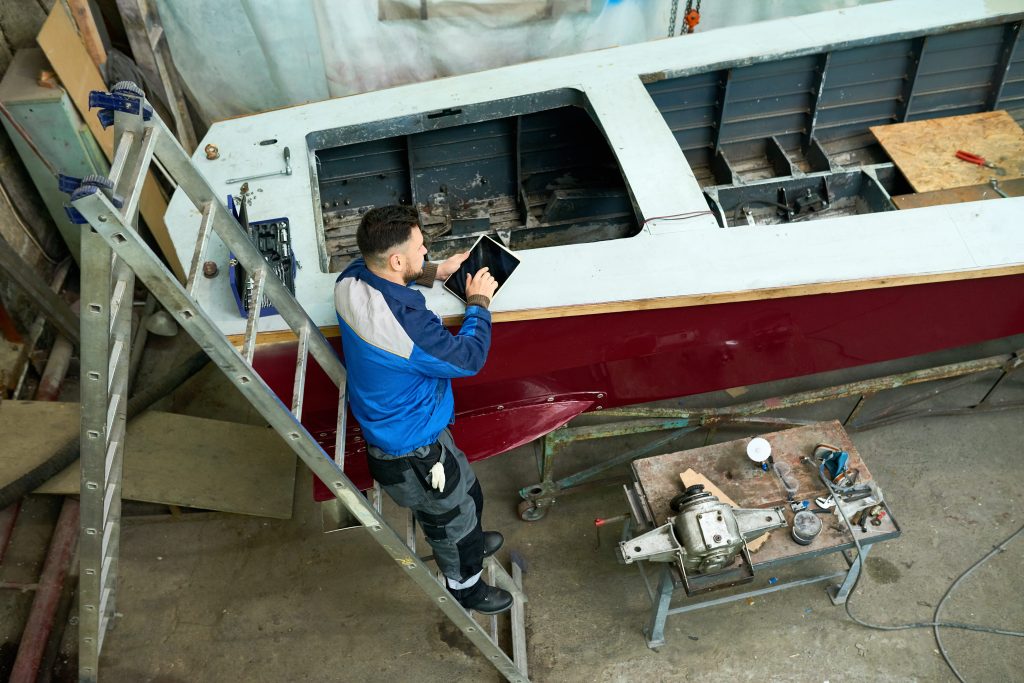
The hull is the most vital structural component of any yacht. Any damage to the hull could compromise the yacht’s safety and performance. When inspecting the hull:
- Check for Cracks or Dents: Small cracks or dents can affect the integrity of the hull. Look for any signs of previous repair work.
- Check the Keel: The keel should be firmly attached and free of any signs of damage. Ensure there are no cracks along the keel joint.
- Check for Moisture: Use a moisture meter to detect any hidden moisture in the hull that could indicate water intrusion or potential damage.
Evaluating the Deck and Cockpit
The deck and cockpit are where you will spend much of your time aboard the yacht. Ensuring these areas are in good condition is crucial for comfort and safety. Pay attention to:
- Deck Condition: Inspect the deck for any signs of damage, such as cracks or warped areas. A smooth, level deck is essential for both aesthetics and safety.
- Seals and Waterproofing: Check that the seals around hatches, windows, and doors are intact. Water intrusion can lead to costly repairs if left unnoticed.
- Cockpit Comfort: Check the seating, railings, and control panels in the cockpit. Ensure that everything is secure and in working order.
Evaluating the Engine and Mechanical Systems
The engine and mechanical systems are the heart of any yacht. A malfunctioning engine can lead to significant issues down the road. When evaluating the engine, look for the following:
- Engine Hours: Check the engine hours to determine how much it’s been used. A lower number of hours on a newer engine can indicate more reliability. An oil analysis and engine survey is something to consider
- Maintenance History: Ask for the yacht’s maintenance log. According to OEM recommendations, regular maintenance is a good sign that the yacht has been well cared for.
- Engine Tests: Run the engine and check for any unusual sounds, smoke, or vibrations. Ensure it runs smoothly and starts without hesitation.
- Fuel System: Examine the fuel lines and tanks for any signs of leaks, rust, or corrosion.
A well-maintained engine can significantly extend the lifespan of your yacht. It may be a good idea to discuss the onboard engine with the local mechanic that typically services the vessel, if possible.
Inspecting the Electrical Systems
Electrical systems are essential to the operation of a yacht. They power everything from lighting to navigation equipment, so ensuring that they function properly is critical. Here’s what to check:
- Wiring and Circuitry: Look for any exposed or corroded wiring. Ensure that all circuits are properly labeled and in good condition.
- Battery Condition: Load Test and check the batteries to make sure they are not damaged or corroded. Replacing old batteries can be costly, so ensure they’re in good working order.
- Navigation and Communication Systems: Inspect all navigation systems, including GPS, radar, and radios. These systems are vital for safe operation.
Properly functioning electrical systems ensure that your yacht operates smoothly and safely.
Examining the Interior and Amenities
A yacht’s interior should be comfortable and well-maintained. Look for any signs of wear or damage that could affect your comfort. Key aspects to inspect include:
- Cabins and Living Spaces: Inspect the upholstery and furniture for wear. Look for any signs of water damage, particularly around windows and hatches.
- Bathrooms and Plumbing: Ensure the plumbing system works properly. Check that the toilets, sinks, and showers are in good condition and that there are no leaks.
- Storage Space: Check that there is ample storage for all your belongings. Ensure that all cabinets and drawers open and close properly.
The Importance of a Marine Surveyor
While you can do a basic inspection yourself, hiring a professional marine surveyor is always recommended. A marine surveyor will thoroughly inspect the yacht and provide you with an in-depth report on its condition. This ensures you know what you’re getting into before making a purchase.
- Expert Knowledge: Marine surveyors have the experience to spot issues that may not be obvious to an untrained eye.
- Independent Evaluation: A surveyor will give you an unbiased evaluation of the yacht’s condition.
- Negotiation Leverage: The surveyor’s report can be used during negotiations to either lower the price or request repairs.
Conclusion: Making Your Purchase with Confidence
A yacht inspection is a vital step in ensuring that your purchase meets your expectations. By following the steps outlined above, you’ll be well-equipped to assess a yacht’s condition and make an informed decision. If you’re in the market for a new or used yacht, check out Norton Yachts’ boat listings for available sailboats, dinghies, and luxury yachts.
Remember, the goal is to buy a yacht that not only fits your lifestyle but also ensures long-term reliability and enjoyment. Happy sailing!